
EV charging in Singapore (2026): HDB access, AC vs DC, charging times and costs
Singapore has about 34,700 EV charging points, 93% of HDB carparks have chargers, and topping up an MG S5 from 10% to 80% costs about $28 to $39 at public chargers. Here is how charging actually works, especially if you live in HDB.
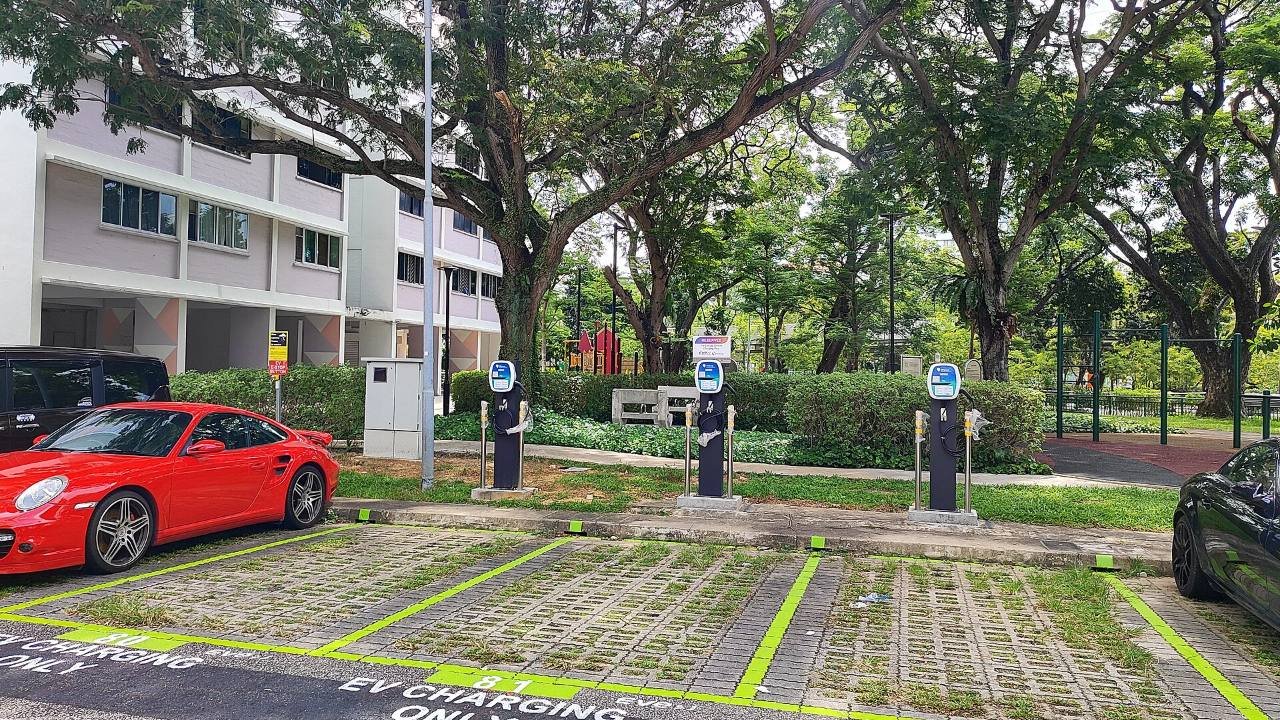
"Where would I charge?" is the first question almost every customer asks us about EVs. It is a fair question, especially if you live in HDB and cannot install your own charger. Here are the current numbers, where they come from, and what they mean for daily driving.
Key takeaways
- Singapore has about 34,700 EV charging points (September 2026), more than halfway to the 60,000 target for 2030.
- 93% of HDB carparks have EV chargers. If yours does not, you can transfer your season parking to a nearby carpark that does, at the same rate.
- Almost 9 in 10 chargers are AC (slow, for parking for hours). About 3,200 are DC fast chargers, and over 90% of those are 50 kW or more.
- An MG S5 takes about 6 hours on 7.4 kW AC, about 1 hour on 50 kW DC, or 26 minutes on a 120 kW+ charger, from 10% to 80%.
- Public charging costs about $0.65 to $0.70 per kWh on AC and $0.75 to $0.89 on DC. A 10% to 80% top-up on an MG S5 costs roughly $28 to $39.
How many EV chargers are there in Singapore?
Singapore had about 34,700 EV charging points as of September 2026. The government target is 60,000 by 2030: 40,000 in public carparks and 20,000 in private premises.
With a little over 82,000 EVs on the road, that works out to roughly one charging point for every two to three EVs. For comparison, Malaysia had about 6,400 public chargers in May 2026, or roughly one for every 15 EVs.
Can you charge an EV if you live in HDB?
Yes. As of March 2026, only 139 HDB carparks, about 7% of the total, had no EV chargers. MOT says the gaps are mostly down to technical limits such as insufficient power supply, or residents asking to delay installation.
Two things HDB residents should know:
- You cannot install your own charger in an HDB carpark. You use the public chargers there, run by operators such as SP Mobility, Charge+, Shell Recharge and CDG ENGIE.
- If your carpark has no chargers, you can transfer your season parking to a nearby HDB carpark that has them, at the same season parking rate.
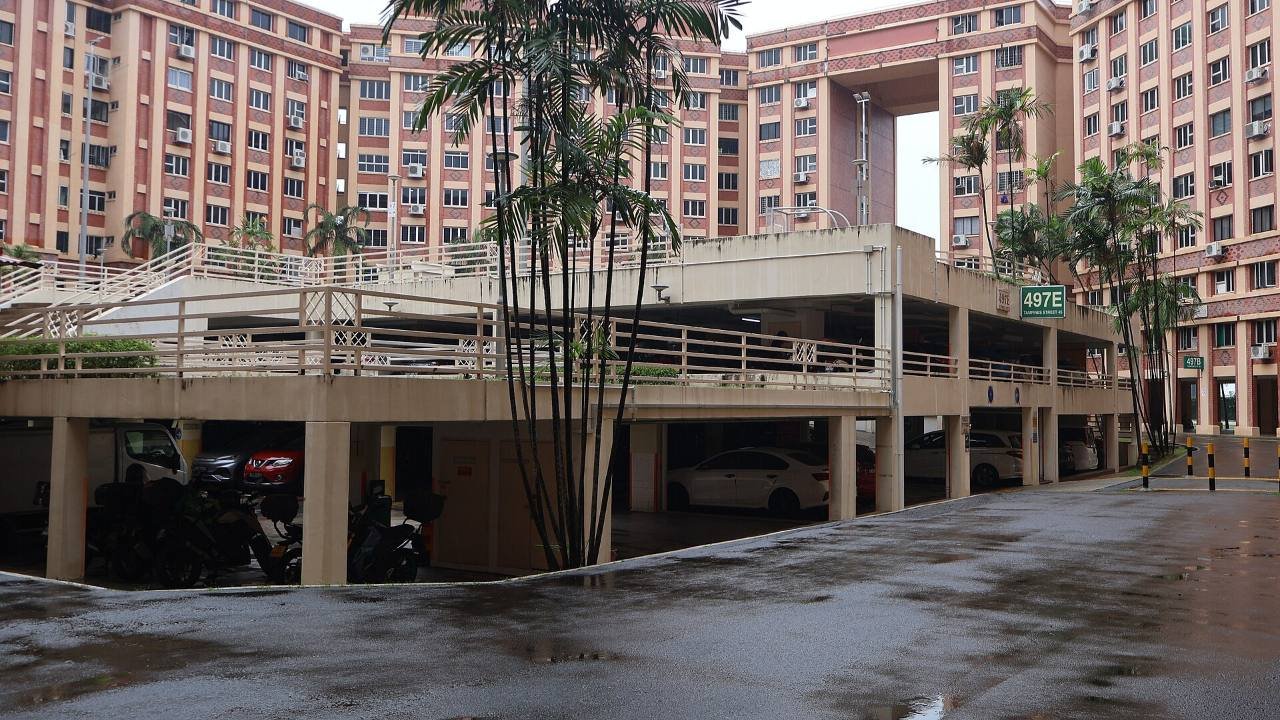
Before you buy, download one of the operator apps and check the chargers nearest your block. Most of our customers find one within walking distance.
What is the difference between AC and DC charging?
AC chargers are slow chargers. The car converts the power itself, so speed is limited, typically to 7.4 kW or less. They suit places where you park for hours: overnight at home, at work or at the mall.
DC chargers are fast chargers. They feed power straight into the battery at 50 kW or more, so a top-up takes under an hour.
| Type | Count (Feb 2026) | Typical power | Best for |
|---|---|---|---|
| AC (slow) | about 24,900 | half are 7.4 kW or below | Overnight, at work, at the mall |
| DC (fast) | about 3,200 | over 90% are 50 kW or above | A quick top-up when you are in a hurry |
Almost nine in ten chargers are AC, and that is by design. Your car spends most of its day parked, so a slow charger that tops it up over several hours is all most drivers need.
The plugs are standard: Type 2 for AC and CCS2 for DC. Malaysia uses the same plugs, so an EV from Singapore can charge in Johor Bahru without an adapter.
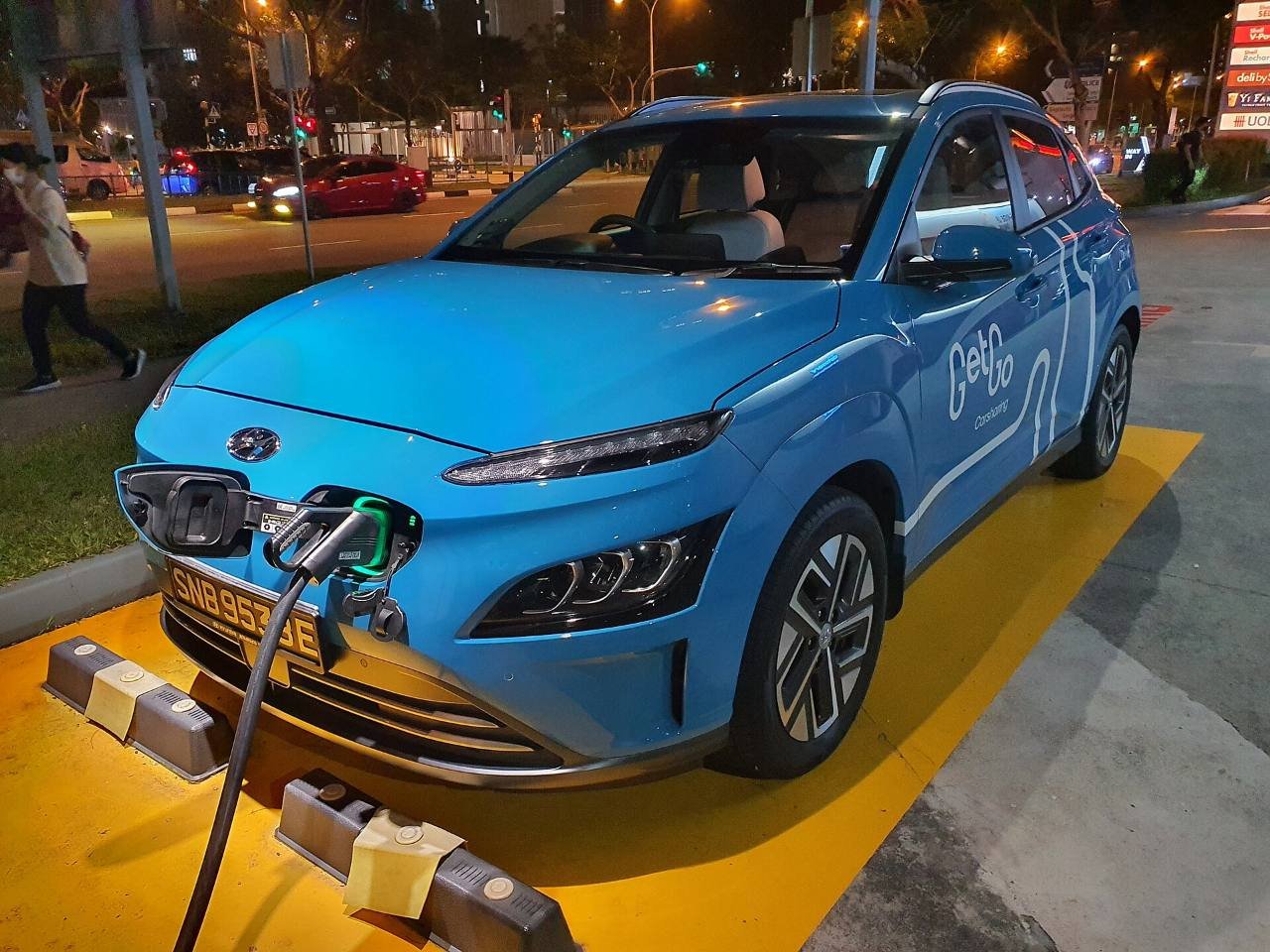
How long does it take to charge an EV in Singapore?
It depends on the charger and the car. Using the MG S5 (62 kWh battery) as an example, charging from 10% to 80%:
These are estimates. Three things change the real time:
- Charging slows above 80% to protect the battery, which is why most people quote 10% to 80%.
- The slower side sets the speed. A car that accepts 150 kW still charges at 50 kW on a 50 kW charger. On the common 50 to 60 kW chargers, most EVs charge at a similar pace.
- Dual-gun chargers split their power when two cars plug in at the same time.
How much does it cost to charge an EV in Singapore?
Public charging rates checked by Motorist in September 2026:
| Operator | AC per kWh | DC per kWh |
|---|---|---|
| Charge+ | about $0.65 | about $0.75 |
| Shell Recharge | about $0.69 | about $0.86 |
| CDG ENGIE | about $0.70 | about $0.76 |
| SP Mobility | about $0.70 | about $0.89 |
For an MG S5 going from 10% to 80% (about 43 kWh), that is roughly $28 to $30 on AC and $33 to $39 on DC. To drive 100 km, that works out to about $11 to $15, against about $20 in a typical petrol car.
Two tips: rates are reviewed quarterly, so check your app, and some operators charge an idle fee if you leave the car plugged in after it is full.
What is coming next for EV charging?
The government plans at least one fast-charging hub in every HDB town by end-2027. The first opened in Tengah in May 2026, beside Plantation Plaza, with 8 DC chargers of up to 100 kW and 6 AC chargers.
SP Mobility's next hubs, from early 2027, are at Bedok North Avenue 3, Teck Whye Lane, Pipit Road (MacPherson), Jurong East Street 31, Tampines Street 34, Woodlands Street 13, Bukit Canberra Sports Centre and Jurong West Sports Centre.
Frequently asked questions
Can I install an EV charger at my HDB carpark?
No. HDB residents cannot install private chargers in HDB carparks. You use the public chargers installed by operators such as SP Mobility, Charge+, Shell Recharge and CDG ENGIE. If your carpark has none, you can transfer your season parking to a nearby carpark with chargers at the same rate.
How long does it take to fully charge an EV in Singapore?
On a 7.4 kW AC charger, a 62 kWh battery like the MG S5's takes about 6 hours from 10% to 80%. On a 50 kW DC charger it takes about 1 hour, and on a 120 kW or faster charger about 26 minutes. Charging above 80% is slower.
How much does it cost to charge an EV at a public charger?
About $0.65 to $0.70 per kWh on AC and $0.75 to $0.89 per kWh on DC, based on September 2026 rates from the major operators. A 10% to 80% top-up on an MG S5 costs roughly $28 to $39.
Is AC or DC charging better for the battery?
Regular AC charging puts less stress on the battery than daily DC fast charging. For everyday use, most owners charge on AC and keep DC for days they need range quickly.
Can I charge a Singapore EV in Malaysia?
Yes. Malaysia uses the same Type 2 (AC) and CCS2 (DC) plugs, so no adapter is needed. Johor Bahru has good coverage. Longer trips need planning, as public chargers are sparser outside the Klang Valley and Johor.
Is charging still a reason to wait?
For most drivers in Singapore, no. The bigger question is which EV suits your mileage and budget. At an ICE-to-EV visit, we check the chargers nearest your block, work out what charging would cost for your weekly driving, and compare it with what you spend on petrol today. Bring your fuel receipts.
Still unsure? Read 5 EV myths Singaporeans still believe.
Sources
- MOT: EV charger breakdown by AC and DC type
- MOT: HDB carparks without EV chargers
- Motorist: 2026 Singapore EV charging rates
- TechNode: SP launches first fast-charging hub in an HDB carpark
- Paultan: Malaysia public EV chargers
Image credits
- Cover: EV charging stations in Singapore by ZKang123, CC BY-SA 4.0
- HDB carpark at Tampines St 45 by Yuqiao, CC BY 4.0
- EV charging at a Singapore petrol station by Deoma12, CC BY-SA 4.0
- Charts: Abang Wheelers, from the sources above


Looking at something specific?
Send us the car and we will run these numbers on it before you commit to anything.